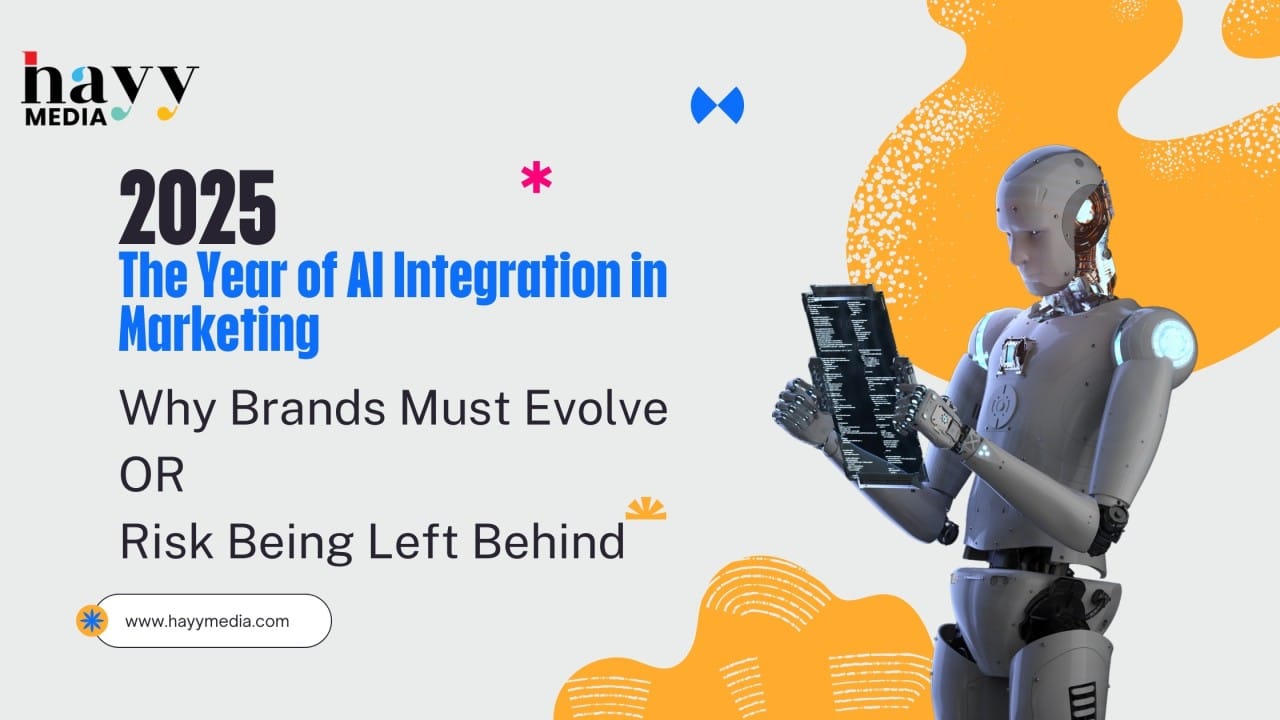
2025: The Year of AI Integration in Marketing – Why Brands Must Evolve or Risk Being Left Behind
- Hayy Media
- January 22, 2025
- Hayy Media, INSPIRATION
- AI in marketing, automation in branding, blog, future of digital marketing, machine learning advertising, personalized marketing AI
- 0 Comments
As we step into 2025, Artificial Intelligence (AI) is no longer just a buzzword; it’s the backbone of modern marketing strategies. Businesses across industries are increasingly integrating AI into their marketing operations, from personalization and automation to data analysis and customer engagement. This widespread integration is reshaping the way brands connect with their audience, making it imperative for businesses to embrace AI-driven strategies or risk falling behind in an increasingly competitive market.
The AI Revolution in Marketing
In 2025, the landscape of marketing has undergone a massive transformation, largely driven by the rise of AI. From chatbots answering customer queries in real-time to hyper-targeted advertising campaigns, AI is helping brands reach consumers more effectively than ever before. According to recent reports, 80% of businesses are expected to integrate AI into their marketing strategies by the end of the year. This shift is driven by AI’s ability to enhance marketing efforts across various aspects of a campaign, making it a critical tool for staying relevant in a digital-first world.
AI allows marketers to automate repetitive tasks, analyze vast amounts of data quickly, and optimize campaigns in real-time. This means businesses can now deliver personalized content, offers, and experiences to their audience, improving engagement and conversion rates. However, the benefits of AI go beyond efficiency. It also enables brands to connect with consumers on a deeper level by understanding their preferences, behaviors, and needs.
Personalized Marketing at Scale
One of the most powerful ways AI is revolutionizing marketing is through personalized content. In 2025, personalization is no longer a luxury—it’s an expectation. Consumers expect brands to deliver relevant, timely, and personalized experiences, and AI enables businesses to meet these expectations at scale.
AI-powered tools analyze data from multiple touchpoints—such as browsing history, purchase behavior, and social media interactions—to create highly personalized messages. These personalized campaigns resonate with consumers, driving higher engagement and loyalty. For example, an e-commerce site can use AI to recommend products based on a user’s browsing history, or a media company can deliver tailored content recommendations.
In fact, a recent study revealed that 60% of consumers are more likely to engage with brands that offer personalized experiences. By leveraging AI, businesses can ensure they’re offering the right message to the right person at the right time.
AI-Driven Automation
Marketing automation is another area where AI is making a significant impact. By automating repetitive tasks, such as email marketing, social media scheduling, and lead nurturing, AI allows marketing teams to focus on more strategic initiatives. AI tools can optimize campaigns by analyzing data and making real-time adjustments to improve performance, whether it’s tweaking an ad copy or adjusting the targeting of an online ad.
This level of automation also enables brands to scale their marketing efforts without increasing headcount. For example, AI-powered tools can automatically segment audiences, create personalized email content, and even send the emails at the most optimal time for each individual. This results in more effective campaigns and a better overall experience for the consumer.
Data-Driven Insights
AI also enables businesses to unlock insights from vast amounts of data that would otherwise be difficult to interpret. Through predictive analytics, AI can forecast customer behavior, market trends, and even the success of marketing campaigns before they are executed. This allows businesses to make data-driven decisions that maximize ROI and minimize risk.
For instance, AI can predict which products are likely to be popular in the coming months based on consumer behavior, seasonality, and market trends. Marketers can then adjust their campaigns to promote these products, ensuring they’re ahead of the curve.
Additionally, AI can monitor campaign performance in real-time, analyzing metrics like click-through rates, conversion rates, and customer feedback. With these insights, brands can quickly pivot their strategies to optimize performance, ensuring they’re always delivering the best possible experience for their audience.
The Need for Brands to Adapt
As AI continues to evolve, brands that fail to adapt risk being left behind. The shift towards AI-driven marketing is inevitable, and businesses that embrace it early will be the ones that thrive in the future. The key to success lies in integrating AI seamlessly into existing marketing strategies and aligning it with business objectives.
Companies should start by identifying areas where AI can add the most value, whether it’s through personalization, automation, or data analysis. Additionally, it’s essential for brands to invest in AI education and training for their teams to ensure they’re equipped to leverage these technologies effectively.
By embracing AI, brands can not only improve their marketing efforts but also create deeper connections with their audience, driving long-term loyalty and success. The future of marketing is AI-powered, and 2025 is the year that businesses must evolve to stay ahead.
DISCOVER MORE ENGAGING CONTENT

Leave A Comment