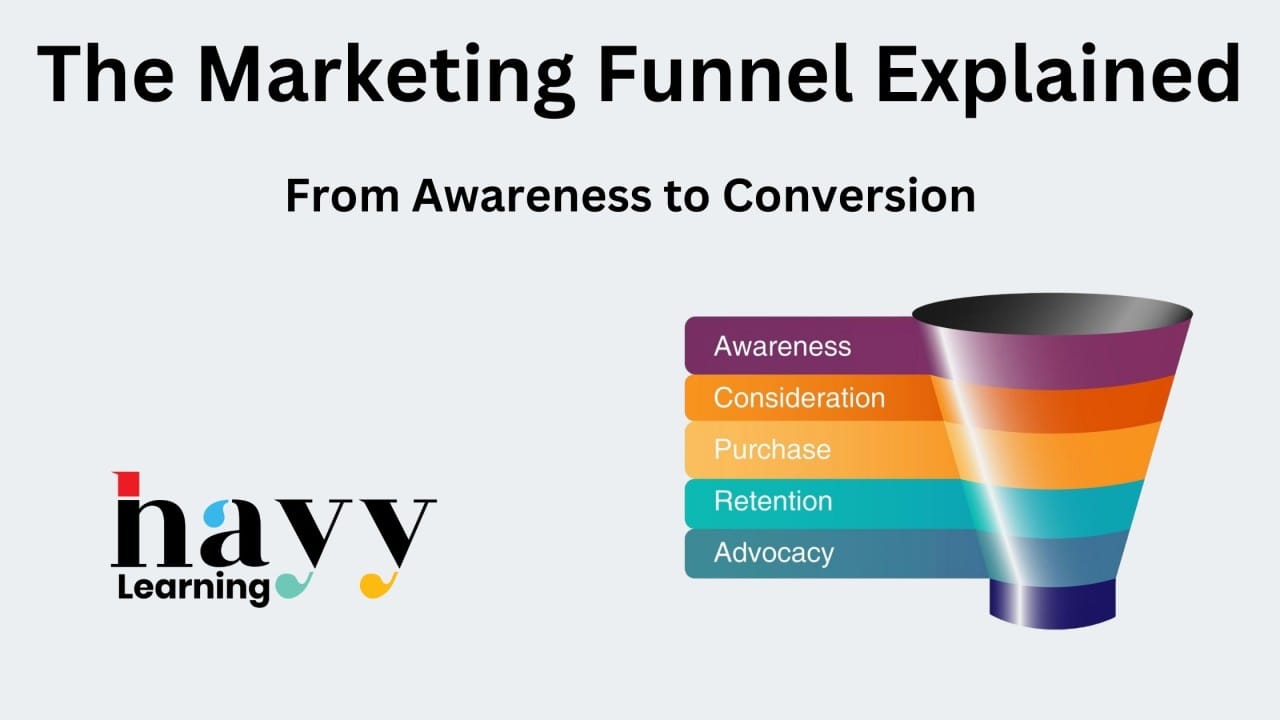
The Marketing Funnel Explained: From Awareness to Conversion
- Hayy Media
- January 4, 2025
- Hayy Media
- awareness to conversion, blog, customer journey mapping, digital marketing strategy, funnel optimization techniques, marketing funnel stages
- 0 Comments
The Marketing Funnel Explained: From Awareness to Conversion
In the fast-paced world of digital marketing, one concept remains fundamental to success: the Marketing Funnel. This model helps businesses map out the journey a customer takes from first learning about a brand to making a purchase decision. Understanding this journey is key to creating effective marketing strategies that drive both engagement and conversion.
The marketing funnel, often illustrated as an inverted pyramid, breaks down the customer journey into several stages. Each stage plays a crucial role in guiding prospects toward becoming loyal customers. Let’s dive into each of these stages and see how businesses can optimize their approach at every point.
1. Awareness Stage: The Top of the Funnel (TOFU)
The first step in any marketing journey is to grab the attention of potential customers. This is where brand awareness comes into play. At this stage, customers may not even be aware that they have a problem or need. The goal is to reach as many relevant prospects as possible and introduce them to your brand.
How to optimize:
- Invest in content marketing (blogs, social media, videos, etc.) to educate your audience.
- Utilize paid ads to increase visibility.
- Partner with influencers or leverage PR to gain exposure.
By creating valuable and informative content, you build trust and establish yourself as an expert in your field. The aim is to provide information that resonates with your target audience and makes them aware of your product or service.
2. Consideration Stage: The Middle of the Funnel (MOFU)
Once potential customers are aware of your brand, the next step is to engage them further. In the consideration stage, prospects are aware of their problems and are actively looking for solutions. They’re considering different options, and this is where your brand has to shine.
How to optimize:
- Offer more detailed content such as case studies, product demos, webinars, or whitepapers.
- Create comparison charts to show the benefits of your solution over competitors.
- Personalize your outreach through email marketing or retargeting ads.
At this stage, it’s all about nurturing leads, answering questions, and providing more in-depth information that helps prospects evaluate their options. This is where you build stronger relationships and help your prospects see the value of choosing your solution.
3. Decision Stage: The Bottom of the Funnel (BOFU)
The final stage of the funnel is where prospects are ready to make a decision. At this point, they’ve done their research, evaluated the options, and are now looking for the final push that will convince them to convert. This is where a well-crafted call to action (CTA) can make all the difference.
How to optimize:
- Provide a clear, compelling offer or discount to encourage immediate action.
- Offer testimonials, customer success stories, or user-generated content to build social proof.
- Use strong, direct CTAs like “Buy Now,” “Start Free Trial,” or “Get a Demo.”
This is the crucial moment when the decision to convert happens. Ensuring that the buyer’s journey is smooth, with a clear path to purchase, is essential. By addressing any lingering doubts and reinforcing your value proposition, you can increase your conversion rate.
4. Retention and Advocacy (Beyond the Funnel)
While the traditional funnel focuses on driving new conversions, modern marketing has expanded this view to include customer retention and advocacy. The truth is, retaining a customer is often more cost-effective than acquiring a new one.
How to optimize:
- Provide excellent customer service to enhance user experience.
- Follow up with personalized emails or offers to keep customers engaged.
- Encourage satisfied customers to leave reviews or refer others.
By fostering relationships even after the sale, you ensure that customers not only return but also become advocates for your brand. This loyalty and word-of-mouth can drive new prospects into the top of the funnel, creating a cycle of sustainable growth.
Conclusion
The marketing funnel isn’t just a theoretical model – it’s a powerful tool for driving results. By understanding each stage and strategically crafting content and experiences for prospects at every point, brands can increase their chances of turning casual visitors into loyal customers.
In today’s fast-evolving digital landscape, it’s not just about attracting attention – it’s about guiding prospects through a meaningful journey that adds value at every stage. That’s how you turn awareness into conversions, and ultimately, create long-lasting customer relationships.
At HAYY Learning, we believe in equipping brands with the knowledge and tools to navigate these stages efficiently. The marketing funnel is the backbone of a successful strategy, and understanding it is the first step towards sustained growth.
#MarketingStrategy #CustomerJourney #LeadGeneration #ConversionOptimization #DigitalMarketing #MarketingFunnel #HAYYLearning
DISCOVER MORE ENGAGING CONTENT




Leave A Comment