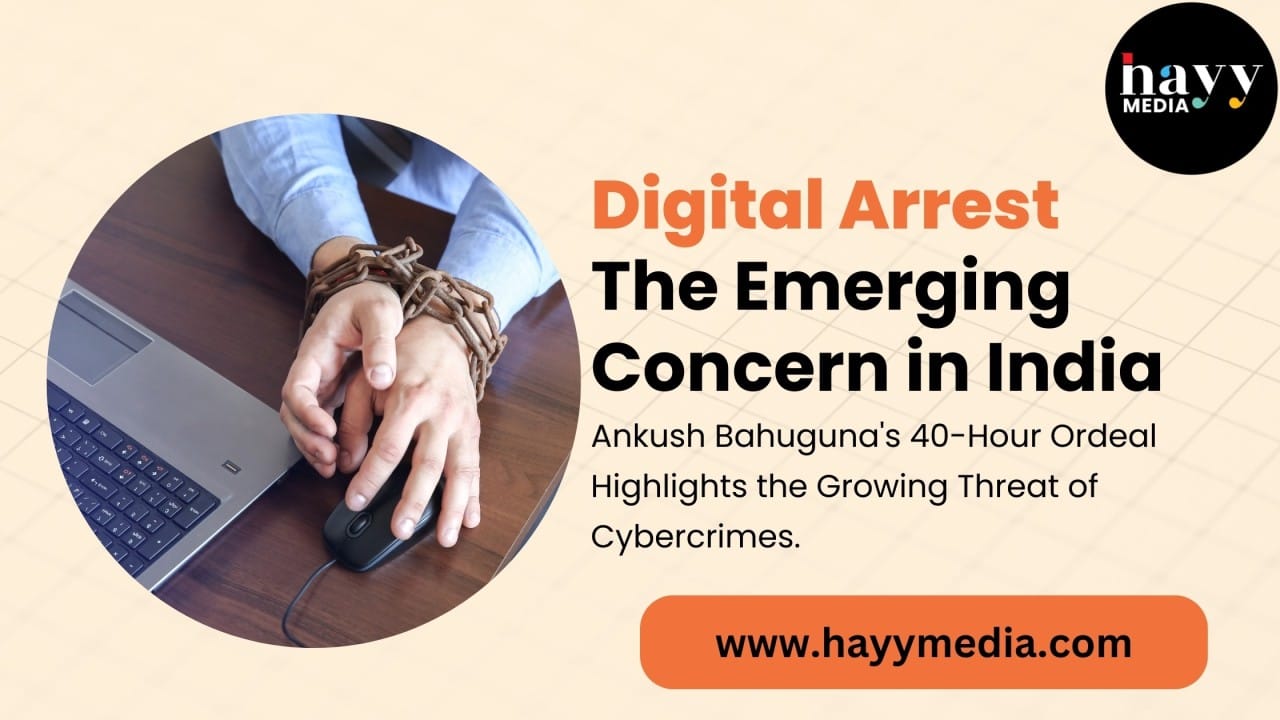
Digital Arrest: The Emerging Concern in India
- Hayy Media
- January 10, 2025
- Hayy Media
- blog, cyber law in India, digital arrest in India, emerging tech regulations, internet freedom concerns, online privacy issues
- 0 Comments
Digital Arrest: The Emerging Concern in India
In an era where technology is integral to daily life, the term “Digital Arrest” has gained traction in India, raising eyebrows and sparking discussions across industries and households. However, a more sinister interpretation of Digital Arrest has come to light—one that involves individuals being held hostage in the digital realm.
What is Digital Arrest of a Person?
Digital Arrest in this context refers to a person being virtually “trapped” due to cybercrime activities. This can involve unauthorized access to their personal or professional digital accounts, rendering them helpless as they lose control over their online presence. Victims of digital arrest often face ransom demands, identity theft, or public humiliation orchestrated by cybercriminals.
Recently, the alarming case of influencer Ankush Bahuguna has highlighted the dangers of Digital Arrest. Ankush fell victim to an elaborate online scam, where his social media accounts were hijacked, effectively holding him hostage in the digital world for 40 hours. This incident has brought to the forefront the vulnerability of even tech-savvy individuals in today’s interconnected environment.
How Did It Happen?
According to reports, Ankush Bahuguna was targeted by cybercriminals who gained unauthorized access to his accounts, locking him out and demanding a ransom. During these 40 hours of digital captivity, Ankush’s ability to communicate with his audience and safeguard his reputation was severely compromised.
This case underscores how cybercriminals exploit loopholes in digital platforms, leveraging phishing schemes, weak passwords, and social engineering tactics to gain access to high-value accounts.
Why is Digital Arrest Becoming Prevalent?
Several factors contribute to the rise in Digital Arrest cases:
1. Increased Reliance on Digital Platforms
From influencers to business owners, individuals depend on digital platforms to maintain their livelihood. This heavy reliance makes them lucrative targets for cybercriminals.
2. Sophistication of Cybercrime
Cybercriminals are adopting advanced techniques such as AI-driven phishing and deepfake technology to deceive victims and bypass security measures.
3. Lack of Awareness
Despite growing digital literacy, many individuals and businesses still lack robust cybersecurity practices, making them susceptible to attacks.
4. Limited Legal Framework
The legal and law enforcement systems are still catching up with the complexities of cybercrimes, leaving victims with limited recourse.
The Impact of Digital Arrest
The consequences of being digitally arrested extend beyond financial losses:
1. Mental Health Strain
Victims often experience anxiety, stress, and a sense of helplessness, as their personal and professional lives are disrupted.
2. Reputation Damage
For influencers and public figures like Ankush Bahuguna, the loss of control over their accounts can lead to reputational harm if malicious content is posted.
3. Financial Losses
Cybercriminals often demand ransoms, and the downtime from being locked out of accounts can result in lost opportunities.
4. Erosion of Trust
Digital Arrest incidents undermine trust in digital platforms, highlighting the need for stronger security measures.
How to Protect Against Digital Arrest
Preventing Digital Arrest requires a proactive approach:
- Strengthen Account Security
- Stay Vigilant Against Phishing
- Educate Yourself and Your Team
- Invest in Cybersecurity Tools
- Report and Seek Help
Conclusion
The case of Ankush Bahuguna serves as a stark reminder of the growing threat of Digital Arrest in India. As our dependence on digital platforms continues to grow, so does the need for awareness and preparedness to combat cybercrime.
By adopting robust cybersecurity practices and advocating for stronger legal protections, individuals and businesses can safeguard themselves from falling prey to Digital Arrest. Ultimately, a proactive approach is key to maintaining control and security in an increasingly digital world.
DISCOVER MORE ENGAGING CONTENT




Leave A Comment