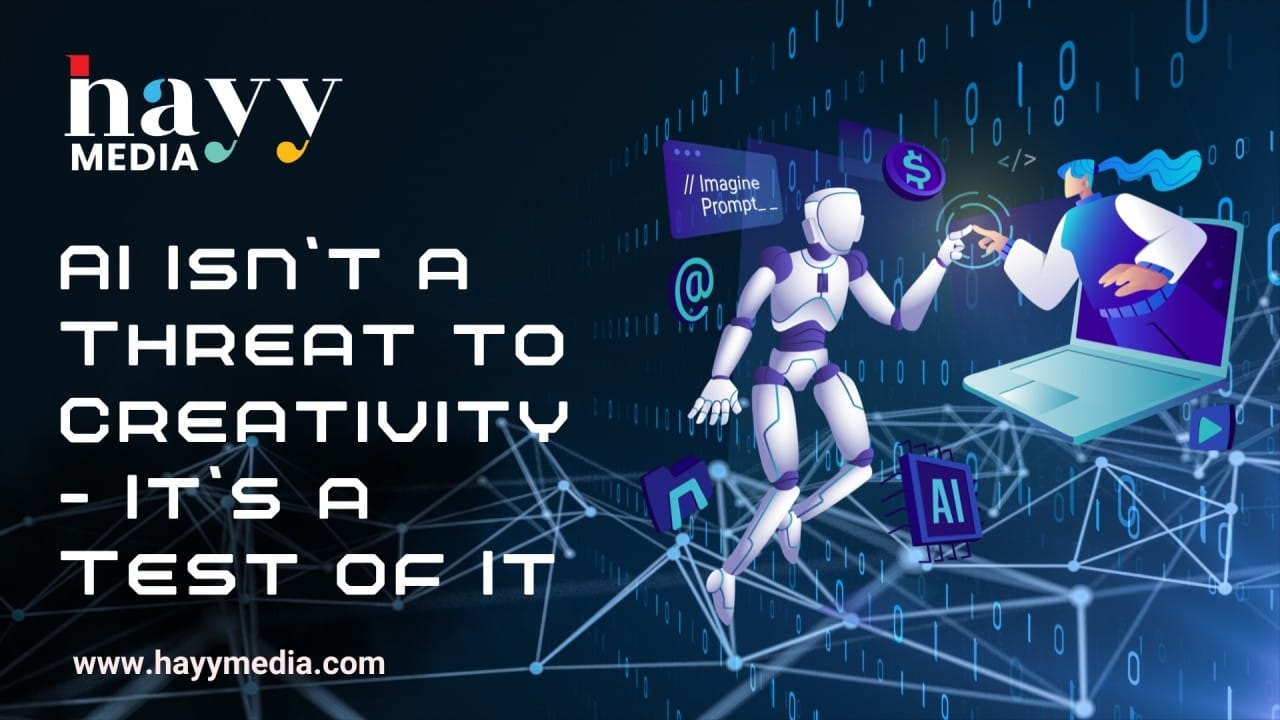
AI Isn’t a Threat to Creativity – It’s a Test of It
- Hayy Media
- September 21, 2025
- Hayy Media, INSPIRATION
- 0 Comments
Let’s break it down. There’s a growing fear among creators, marketers, and strategists that AI will replace human creativity. Headlines scream that machines will “take over creative jobs”, that algorithms will produce better content, design, and even art faster, cheaper, and more efficiently than any human ever could. But here’s the thing: AI doesn’t kill creativity. It tests it.
AI doesn’t think – it analyzes patterns. It doesn’t feel – it generates outcomes based on data. What it does best is mimic. That’s not creativity. Creativity is about original thought, emotional depth, connecting ideas in new ways, and challenging norms.
The real challenge now is to use AI tools not as a shortcut, but as a benchmark. When you ask AI to generate a piece of content, it taps into vast datasets, replicating trends, commonly used phrases, and popular formats. But does it inject personality, empathy, cultural context, or a unique point of view? No.
Let’s take copywriting as an example. An AI tool can spit out a blog post about “How to Improve Your Social Media Engagement” in seconds. It follows the structure, includes keyword density, bullet points, and proper SEO tags. But where does the insight come from? Where’s the bold idea, the witty angle, the personal experience that sparks genuine connection?
Creativity lies in the question, not the answer.
Great creatives ask questions AI doesn’t understand. Why do people share content emotionally rather than logically? What cultural shifts are happening beneath the surface, invisible to raw data but evident in conversations, behavior, and sentiment? Those are not problems AI can solve on its own. It can suggest, but it doesn’t analyze deeper human patterns.
This is a test of originality.
Marketers and creators need to get smarter about AI. The key isn’t fighting it but mastering it. Learn where it helps and where it doesn’t. Use it to handle repetitive tasks – like optimizing headlines for SEO, suggesting content structures, or generating basic draft copy. Then use your human brain to elevate it. Add a twist of insight, challenge the status quo, tell a story that resonates.
Here’s another angle: Art.
AI-generated art can be visually striking, combining different styles in unique ways. But it doesn’t experience wonder, heartbreak, or joy. It doesn’t rebel, reflect personal struggles, or respond to real-world events from a subjective lens. A piece of art’s value often comes from why it was created, not just how it looks.
The future belongs to creators who see AI as a collaborator, not a competitor.
The best strategy isn’t to fear replacement but to aim for differentiation. AI’s growth makes creativity more visible and more scrutinized. Every piece of content, every design, every campaign is challenged to prove its originality, depth, and strategic value. If it looks like something an algorithm could do, it probably isn’t creative.
This isn’t doom and gloom; it’s a wake-up call.
Think about your unique perspective, your lived experiences, your ability to connect the dots in ways no algorithm can replicate. AI forces creators to raise the bar. It asks: Are you just generating content, or are you creating meaning?
For businesses, this is a golden opportunity. Instead of cutting creative teams, invest in developing strategic thinking, storytelling abilities, and human-centric design. Let AI do the heavy lifting while humans focus on making emotional, bold, and unexpected creative decisions.
The creative industry won’t shrink because of AI. It will expand, demanding sharper insights, more emotional intelligence, and fearless storytelling.
AI is not a threat. It’s a test.
For more insightful articles, visit https://hayymedia.com/blogs/
DISCOVER MORE ENGAGING CONTENT

Leave A Comment