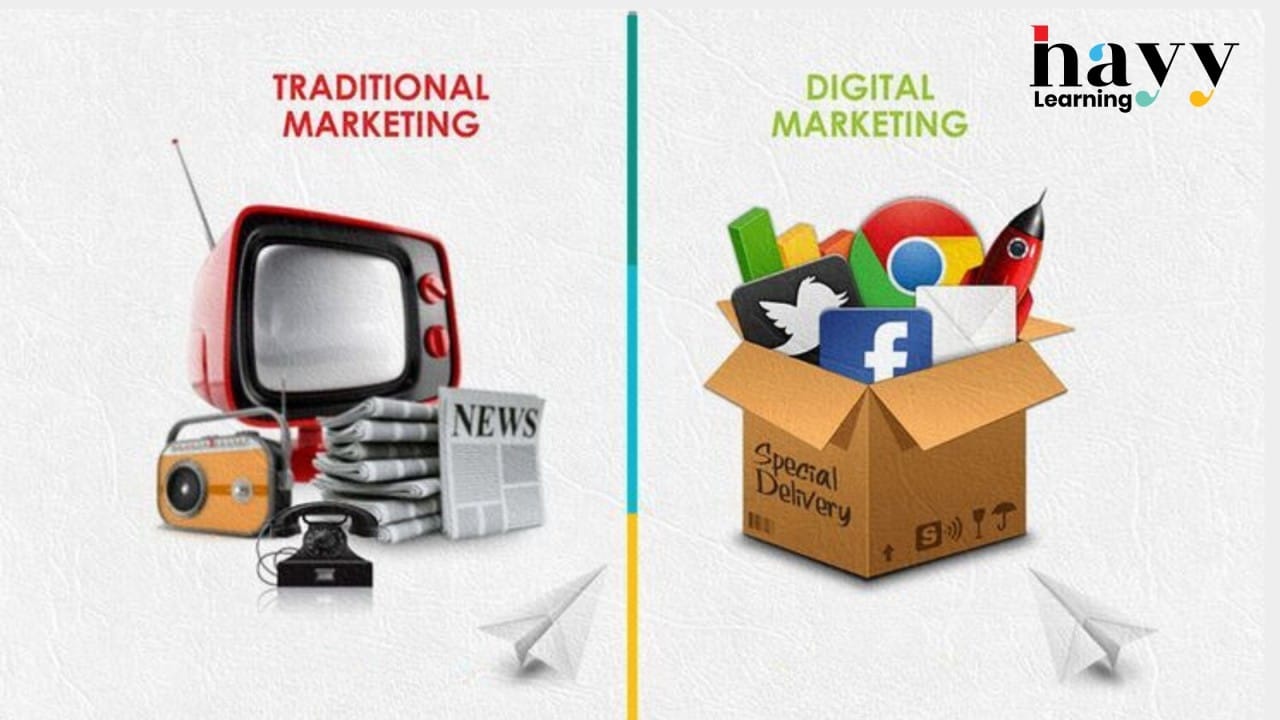
Key Differences Between Traditional and Digital Marketing
- Hayy Media
- January 10, 2025
- Hayy Learning
- blog, digital transformation, marketing strategy comparison, modern advertising, online vs offline marketing, traditional vs digital marketing
- 0 Comments
Key Differences Between Traditional and Digital Marketing
Marketing has always been about connecting with audiences in the right place and at the right time. While the essence remains unchanged, the methods have evolved dramatically. Traditional marketing and digital marketing are two sides of the same coin, each with its unique strengths, challenges, and applications.
At HAYY Learning, we believe in understanding the nuances of both to make informed decisions for effective communication strategies. Let’s explore the key differences:
1. Medium of Communication
- Traditional Marketing: Leverages offline channels like newspapers, TV, radio, billboards, and direct mail to reach audiences.
- Digital Marketing: Utilizes online platforms like social media, email, search engines, and websites to connect with audiences in real-time.
2. Audience Targeting
- Traditional Marketing: Targets a broad audience, often based on geographical or demographic factors.
- Digital Marketing: Offers precise targeting options using data analytics, allowing brands to reach niche audiences based on interests, behavior, and more.
3. Cost and ROI
- Traditional Marketing: Typically involves higher upfront costs with limited tracking capabilities.
- Digital Marketing: Offers cost-effective solutions with measurable ROI through analytics tools.
4. Interactivity
- Traditional Marketing: One-way communication; the audience consumes content without direct engagement.
- Digital Marketing: Encourages two-way interaction, enabling brands to build relationships through comments, shares, and feedback.
5. Measurement of Success
- Traditional Marketing: Relies on indirect methods like surveys or sales trends for performance analysis.
- Digital Marketing: Provides real-time insights and metrics such as click-through rates, conversions, and audience engagement.
6. Adaptability
- Traditional Marketing: Campaigns require significant lead time for creation and distribution, making changes challenging.
- Digital Marketing: Offers flexibility to adjust strategies, optimize content, and pivot campaigns instantly based on performance data.
7. Longevity
- Traditional Marketing: Often has a longer shelf life (e.g., magazines or billboards).
- Digital Marketing: Content is more dynamic, but its relevance can diminish quickly in a fast-paced online world.
Bridging the Gap
While both approaches have their place, the synergy between traditional and digital marketing often yields the best results. Brands that integrate these strategies effectively can harness the power of both to create a holistic marketing experience.
At HAYY Learning, we dive deep into these concepts, equipping professionals with the tools to navigate the ever-changing marketing landscape.
What’s your take? Are you team traditional, digital, or hybrid? Share your thoughts below!
#MarketingInsights #HAYYLearning #DigitalVsTraditional
DISCOVER MORE ENGAGING CONTENT



Leave A Comment